Swimming pools add value and enjoyment to a property, but they also come with strict legal responsibilities. NSW pool fence regulations set the minimum safety standards for pool barriers to help reduce the risk of unsupervised access, particularly by young children. Whether you are building a new pool, renovating an existing one or managing a strata property, meeting these requirements is essential.
In most cases, pool fences in NSW must meet minimum requirements for height, gate operation, opening sizes and non-climbable zones. Glass pool fencing must also comply with the relevant Australian Standards and NSW legislation before it can be certified.
For glass pool fencing, compliance goes beyond achieving a modern appearance. The system must be correctly designed, securely installed and built to withstand the pool environment while meeting Australian Standards and NSW legislation. This guide explains the key NSW pool fence regulations and what Sydney homeowners, builders, architects and strata managers need to know before installing or upgrading a pool fence.
Why NSW Pool Fence Regulations Matter
A swimming pool can add major value and lifestyle appeal to a Sydney home, but it also creates a serious safety responsibility. NSW pool fence regulations exist because pool barriers are one of the most important ways to reduce the risk of unsupervised child access.
For homeowners, this means your pool area must be properly fenced, maintained and checked over time. For builders, it means the pool fence must be planned early enough to suit finished ground levels, paving, decking, retaining walls and landscaping. For strata managers, it means shared pool areas must be inspected, maintained and documented so residents and visitors remain protected.
Pool fence compliance NSW requirements can affect:
- New pool builds and backyard renovations
- Glass pool fencing upgrades
- Property sales and leasing
- Strata pool areas and shared facilities
- Council or private certifier inspections
- Insurance and duty-of-care concerns
- Long-term safety for children and families
A pool fence that looks attractive is not automatically compliant. The height, gaps, gate swing, latch, non-climbable zone and surrounding objects all matter.
What Pools Need a Safety Barrier in NSW?
In NSW, pool fencing laws apply to swimming pools and spa pools that are capable of being filled with water to a depth greater than 300 mm and are used, designed or adapted for swimming, paddling, wading or similar aquatic activity.
This can include:
- In-ground swimming pools
- Above-ground pools
- Spa pools
- Swim spas
- Portable pools that can hold 300 mm or more of water
- Pools in private homes
- Pools in strata, rental or visitor accommodation settings
A common mistake is assuming small or temporary pools are exempt. If a portable pool can hold enough water, it may still require a compliant safety barrier and CPR signage. Homeowners should always check before setting up or retaining any pool that may fall under NSW pool safety rules.
Key NSW Pool Fence Measurements
The exact requirements for a pool barrier in NSW depend on factors such as when the pool was built, the applicable NSW legislation, the type of project and whether the barrier has been altered or replaced. In many new pool projects, compliance is assessed against the current edition of AS 1926.1, together with the relevant NSW legislative requirements. However, the applicable compliance pathway may vary depending on the circumstances of the project.
The table below summarises some of the key measurements commonly required for modern pool barriers.
| Requirement | Typical Requirement* | Purpose |
| Pool fence height | At least 1.2 metres | Reduces the risk of young children climbing over the barrier. |
| Boundary fence used as part of the barrier | At least 1.8 metres | Provides additional protection where the property’s boundary forms part of the pool enclosure. |
| Gap beneath the fence | No more than 100 mm | Helps prevent children crawling underneath the barrier. |
| Openings between vertical members | No more than 100 mm | Prevents children from squeezing through the barrier. |
| Horizontal rails or climbable elements | Must not create footholds within the 900 mm non-climbable zone (NCZ) | Reduces climbing opportunities. |
| Non-climbable zone (NCZ) | 900 mm outside the barrier | Keeps trees, furniture, pot plants, air conditioning units and other climbable objects away from the fence. |
| Internal clearance | 300 mm clear on the pool side of the barrier | Helps prevent footholds on the inside of the fence. |
*Requirements may vary depending on the age of the pool, barrier type and the standard that applies.
Under AS 1926.1:2024, pool barriers must also be designed so they cannot be easily climbed. The standard sets detailed requirements for non-climbable zones, gate operation, barrier strength, permissible openings and the positioning of nearby objects that could assist climbing. Self-closing, self-latching gates remain mandatory and must always swing away from the pool area.
These measurements provide a general guide only and should not replace a site-specific assessment. A certifier or local council will assess compliance based on the applicable legislation, the relevant Australian Standard, the age of the pool and any alterations made to the barrier or surrounding area.
Understanding Pool Fence Height and Gate Compliance
The measurements above are only part of achieving a compliant pool barrier. Finished ground levels, landscaping and gate performance can all affect whether a fence passes inspection. The following are some of the most important areas to consider when planning or upgrading a pool fence.
Pool Fence Height
The standard NSW pool fence height is generally at least 1.2 metres from finished ground level. This detail is important because the final ground level can change after paving, tiling, decking, turf, garden beds or landscaping work.
For example, a glass pool fence may be compliant before new paving is installed, but if the paving raises the finished level around the fence, the effective height may reduce. This can create a compliance issue during inspection.
Builders and homeowners should check pool fence height after final levels are confirmed. This is especially important on sloping Sydney blocks, coastal properties, split-level outdoor areas and homes with raised pool surrounds.
Boundary fences are different. If a boundary fence forms part of the pool barrier, it generally needs to be at least 1.8 metres high when measured from the pool side. Landscaping, retaining walls, planter boxes and raised garden beds near the boundary fence can also affect compliance.
Pool Gate Requirements
Pool gates are one of the most common reasons pool barriers fail inspection. A compliant pool gate must not simply close when pushed. It must be able to close and latch automatically from any open position.
A pool gate should:
- Swing outwards, away from the pool area
- Never be propped open
- Self-close without manual force
- Self-latch when it closes
- Have working hinges, latch hardware and fasteners
- Remain aligned so the latch connects properly
- Be maintained regularly
For glass pool fencing, the gate must be installed with the correct hinges, latch position, panel alignment and closing tension. Over time, movement, corrosion, worn hinges or ground movement can affect performance. That is why regular gate testing is essential, even after the fence has passed inspection.
Non-Climbable Zones
The non-climbable zone is one of the most important parts of NSW pool fence regulations. It is designed to stop children using nearby objects as footholds or handholds to climb over the barrier.
The 900 mm non-climbable zone must be kept clear of objects such as:
- Pot plants
- Outdoor furniture
- BBQs
- Storage boxes
- Toys
- Ladders
- Tree branches
- Shrubs
- Retaining features
- Loose items near the fence
The non-climbable zone is not only a construction issue. It is also a maintenance issue. A pool fence may pass inspection when installed, then become non-compliant later if furniture, plants or landscaping are placed too close to it.
For Sydney homes with designer outdoor spaces, this is a common issue. Pool landscaping, glass fencing and outdoor furniture need to be planned together so the final area looks good and remains compliant.
Glass Pool Fencing Regulations NSW
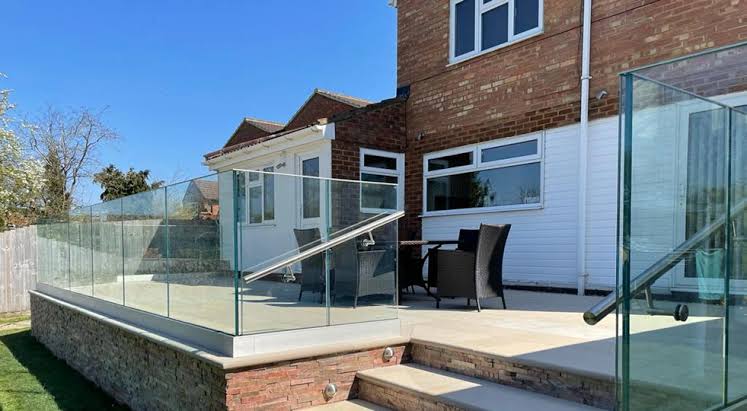
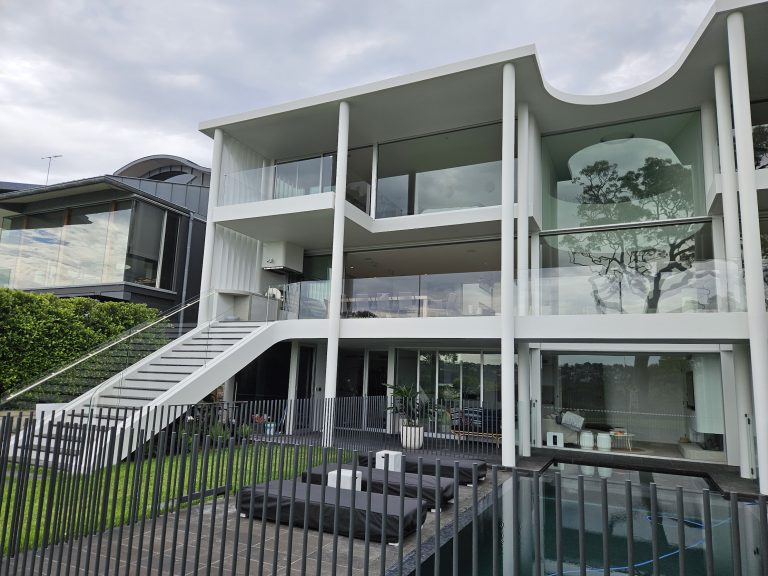
Glass pool fencing is a popular choice because it keeps the pool area open, modern and visually clean. It is especially suited to premium Sydney homes where views, natural light and architectural finishes matter.
Glass pool fencing must still comply with the same safety requirements as any other pool barrier. The system must be designed and installed with the correct height, gaps, gate hardware, fixings and non-climbable zones to achieve compliance.
A compliant glass pool fence should consider:
- Fence height from finished ground level
- Gate swing and self-latching function
- Gaps under panels and between panels
- Spigot, channel or post fixing strength
- Glass type and thickness
- Wind, impact and site conditions
- Drainage, paving and finished levels
- Corrosion resistance in coastal areas
- Certification and inspection requirements
For coastal areas such as the Northern Beaches, Eastern Suburbs and Sydney’s harbour-side suburbs, material selection is also important. Stainless steel hardware, aluminium components and exposed fixings should be selected to suit the environment and provide long-term performance.
Pool Fence Compliance for Builders and Renovators
For builders, NSW pool fence regulations should be reviewed early in the project, not left until final inspection. Pool fencing can be affected by many parts of the build, including excavation, paving, retaining walls, deck heights, garden beds, boundary fences and access paths.
Before ordering or installing a pool fence, builders should confirm:
- Finished ground levels
- Pool edge and coping details
- Decking or paving thickness
- Boundary fence involvement
- Gate location and swing direction
- Drainage and fall across surfaces
- Retaining wall heights
- Nearby climbable objects
- Required certification pathway
- Whether the pool is new, existing or being altered
This planning helps prevent expensive rework. A few millimetres of level change, a gate opening the wrong way or a planter box placed too close to the fence can create compliance issues.
Pool Fence Compliance for Strata Properties
Strata pool areas need strong maintenance and documentation because they are used by multiple residents, tenants and guests. Owners corporations and strata managers should arrange regular checks to make sure the barrier still works as intended.
Strata pool fence risks can include:
- Gates not self-closing
- Latches wearing out
- Loose or corroded hardware
- Damaged glass panels
- Gaps caused by ground movement
- Furniture placed in the non-climbable zone
- Plants growing too close to the fence
- Missing or faded CPR signage
- Old barriers affected by remedial works
For strata properties, records matter. Inspection reports, repair records, product details and certification documents should be kept for future reference. This helps with compliance, owner communication and risk management.
Common NSW Pool Fence Compliance Mistakes
Many pool fence issues are caused by small details that are easy to miss. Common mistakes include:
- Measuring fence height before final paving is complete
- Allowing gaps greater than 100 mm under or between fence sections
- Installing a gate that opens toward the pool
- Using a gate that does not self-close from every position
- Placing pot plants or furniture inside the non-climbable zone
- Letting tree branches grow near the fence
- Adding raised garden beds beside a boundary barrier
- Forgetting CPR signage
- Assuming old barriers still meet current requirements
- Replacing glass panels without checking the full system
The best approach is to treat pool fencing as a full safety system, not just a line of panels around the pool.
Wrapping Up
NSW pool fence regulations are designed to reduce the risk of child drownings while helping property owners maintain safe and compliant pool areas. Although the specific requirements can vary depending on the age of the pool and the applicable legislation, understanding the key measurements, gate requirements and non-climbable zone rules is essential before building, replacing or upgrading a pool barrier.
A professionally designed and installed glass pool fence can deliver both safety and a modern finish when it complies with AS 1926.1:2024 and NSW requirements. Working with experienced installers also helps achieve a barrier that is durable, visually appealing and ready for certification.
Need Compliant Glass Pool Fencing in Sydney?
NSW pool fence regulations involve more than choosing the right fencing system. Finished ground levels, site layout, gate hardware and installation all play a role in achieving a safe and compliant pool barrier.
At Ocean Glass Australia, we design, fabricate and install compliant glass pool fencing for Sydney homeowners, builders, architects and strata projects. Our team works across the Northern Beaches, North Shore, Eastern Suburbs and greater Sydney, delivering frameless and semi-frameless pool fencing with a premium finish.
From new pool builds and compliance upgrades to complete outdoor renovations, we can help you achieve a safe, compliant and visually refined result.
Contact Ocean Glass Australia to discuss your pool fencing project and receive practical guidance from a Sydney glass installation team that understands compliance, quality workmanship and attention to detail.